Gamedev Production & Design Workbook
A practical companion for Producers, Designers & Leads – turn project chaos into clear decisions and a plan you can execute.
- Run cleaner milestones
- Make scope decisions faster
- Keep the team aligned (without adding another tool)
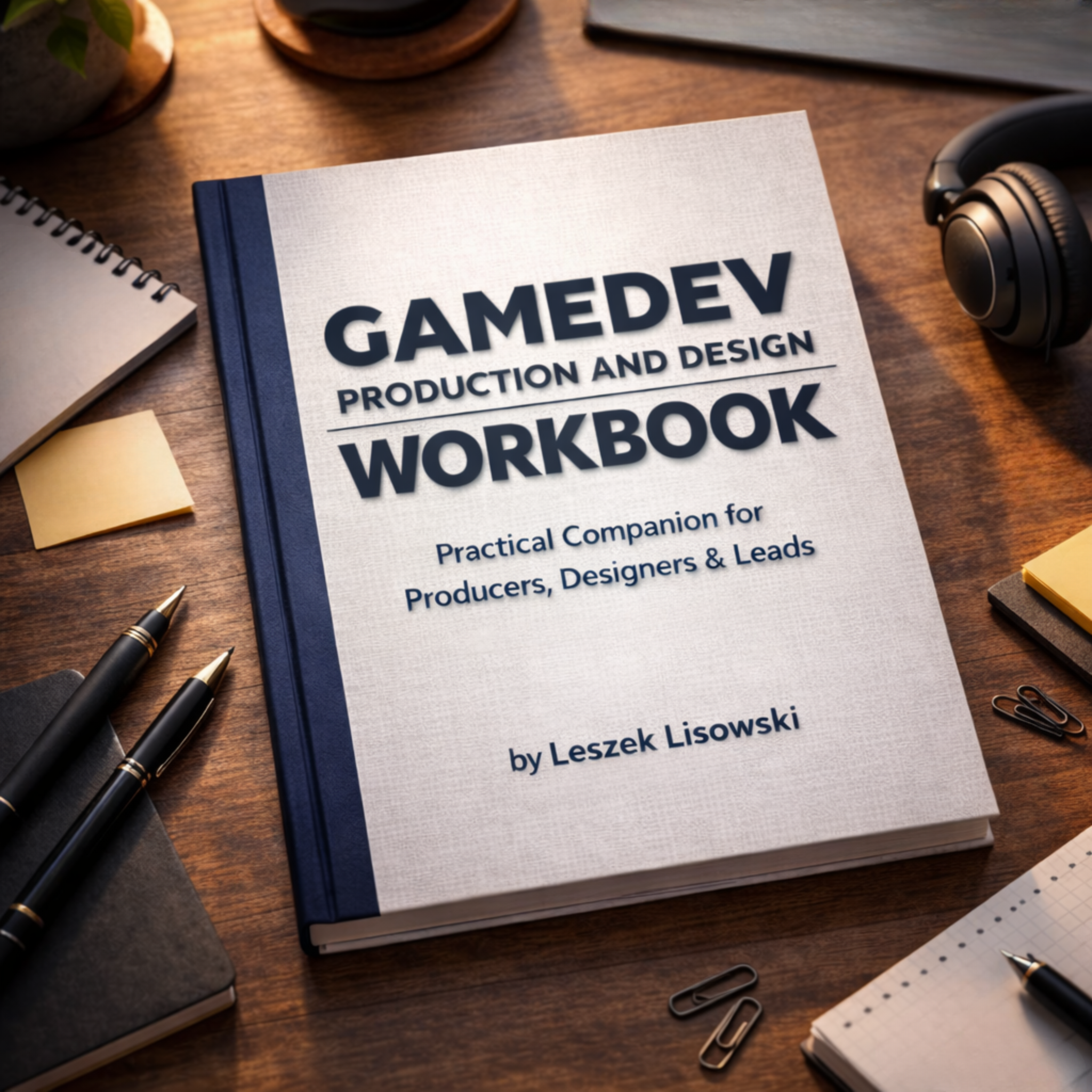
Available in paperback and hardcover
Who this workbook is for
- Producers and project owners under real deadlines
- Designers who want alignment, not endless meetings
- Leads translating vision into execution
- Anyone tired of notes scattered across tools
- Teams that need repeatable frameworks for planning and delivery
How it works
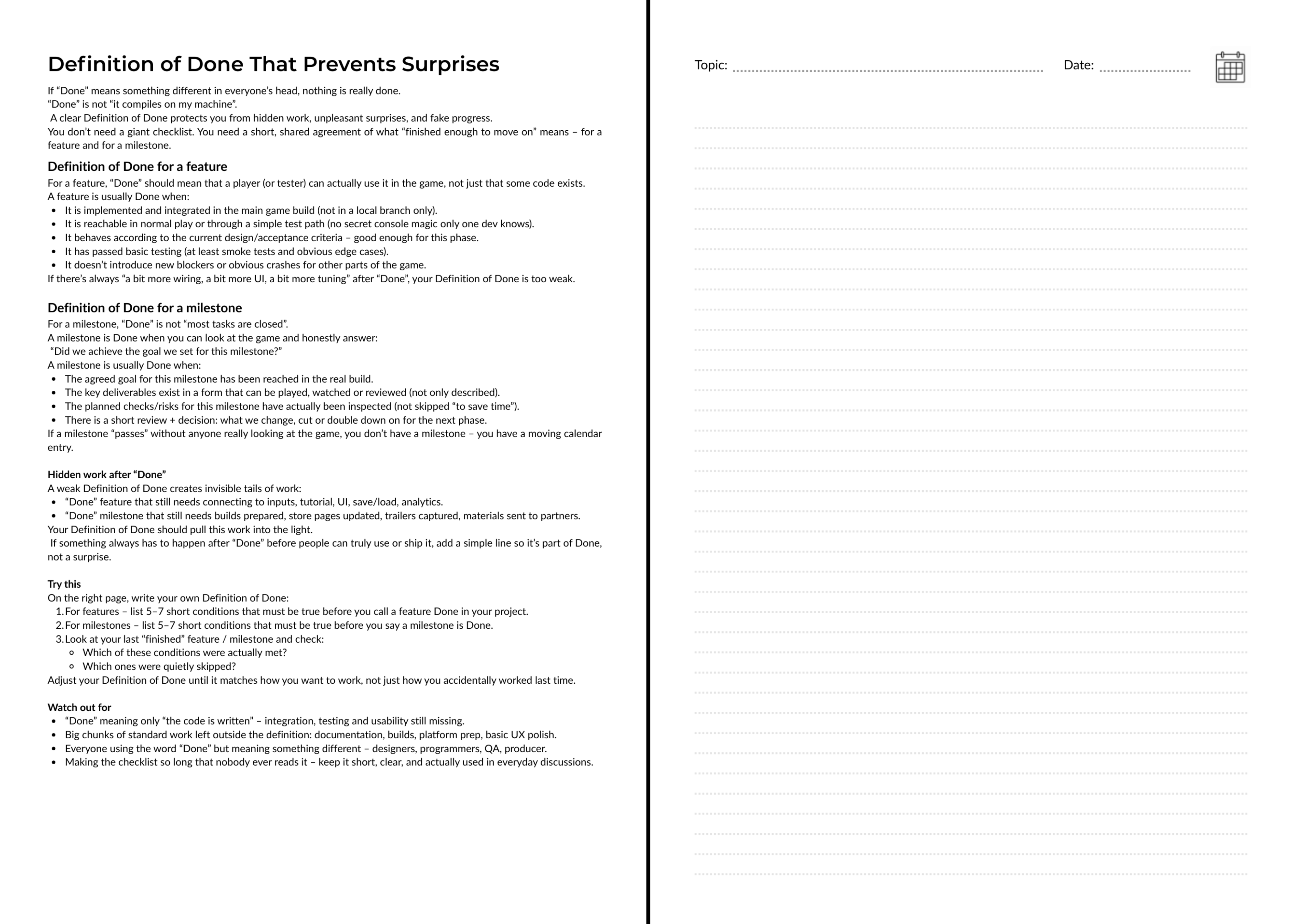
Each topic gives you a simple framework on one page and space to apply it on the next. Read it, write it, use it in meetings, move forward with a clearer plan.
- Frameworks that help you decide (not “inspire”)
- Questions that turn uncertainty into next actions
- Space to plan, review, and iterate – on paper
What’s inside
- Foundations & Vision
- Planning & Scoping
- Production & Processes
- Game Design & UX
- Business, Store & Marketing
- Team & Communication
- Personal Workflow & Growth
Use it in pre-production, milestone planning, roadmap reviews, playtests, and postmortems.
Helps with: Scope cut, Definition of Done, Decision log, Milestone health check, Stakeholder map, Bug triage, Build rhythm, Handoff checklist, Store page audit, 30/60/90 after launch
240 pages
100 topics
178 x254 mm (7 x 10 inches)
What you’ll get out of it
- Clearer decisions and cleaner milestones
- Better scope control without endless debate
- More useful meetings and fewer misunderstandings
- A repeatable system you can reuse across projects
- A single place to think, plan, and capture the important stuff
Ready to make your production life easier?
Choose your format on Amazon
FAQ
No. This is a workbook – a set of frameworks and structured pages designed to be used on real projects. It’s intentionally not filled with long case studies, because the goal is speed: pick the right page, make the call, write it down, move on.
Both – but in different ways. Juniors get structure and guardrails. Seniors get a fast alignment tool: checklists and frameworks that prevent re-learning the same lessons under pressure.
Start with your current pain. Pick one problem (scope creep, milestone slipping, messy handoffs, unclear Definition of Done), fill one spread, and use it in your next meeting. The pages are written so you can apply them without needing a sample answer.
No. It’s useful for individual contributors too – designers, programmers, artists, QA, and anyone who wants clearer scope, cleaner handoffs, and fewer “what did we decide?” moments. You can use it to prepare for meetings, surface risks early, and document decisions in a way that makes collaboration easier.
No. Jump to the page you need for the problem you’re solving today.
No. It complements them by helping you make better decisions before you create tasks – so what you put into your tools is clearer and easier to execute.
It’s written for gamedev, but it also fits software and product teams working cross-functionally – especially where scope, milestones, risks, and alignment matter.
Execution-first. Store pages, messaging basics, launch/post-launch hygiene, and practical checklists. It’s not an advanced UA/retention or analytics handbook – the focus is on what many teams skip and later pay for.
Because it’s meant to be a desk tool. Physical use is the point: open it, write, flip pages, and keep it present during planning and meetings. A digital version would become just another file.
Paperback is lighter and cheaper. Hardcover is sturdier for daily desk use.
By subscribing, you agree to receive emails about this workbook and occasional updates about other creations. You can unsubscribe anytime. Privacy Policy
Thank you for subscribing!
Have a great day!